HomeManufacturing
From billet to finished profile: six steps
A complete aluminium extrusion system: six processes from billet intake to finished-goods dispatch in one park, with an anodising line and an automatic coating line; max circumscribed circle φ380 mm, min wall thickness 0.8 mm, complex hollow chambers formed in one pass.ระบบการผลิตครบวงจร 6 ขั้นตอน
Process setups shown here are typical examples; exact specs, precision and tolerances are confirmed at drawing review and per order.
PROCESS · Process Flow
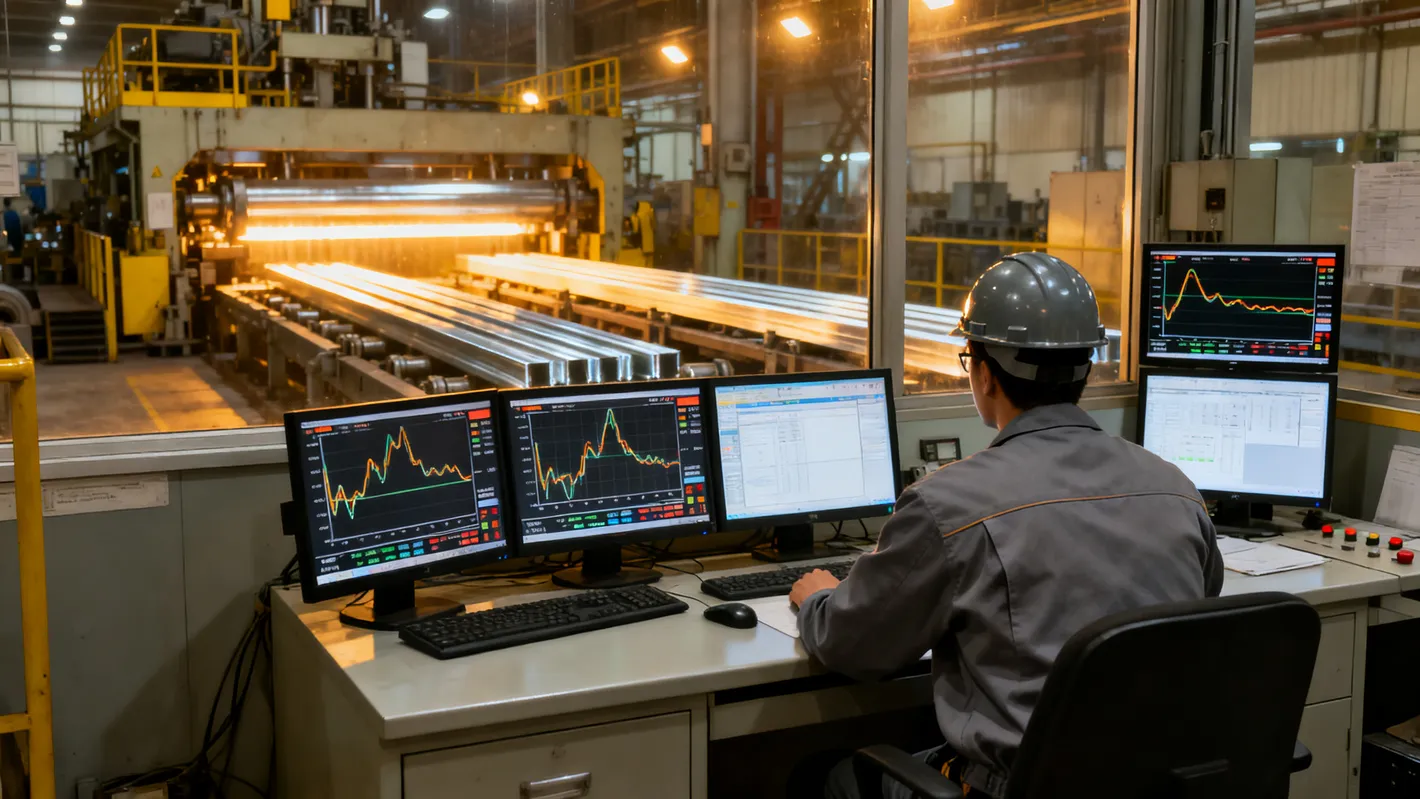
PROCESS / 01
Billet Heating
Billets are charged by batch; the control room sets temperature and time per alloy and zone to prepare a uniform structure for extrusion. Every heat is logged with its batch and traceable to a project and order.
- Zoned temperature control
- Batch logging
- Dual China–Thailand Standards
- Uniform structure
- Heats traceable to projects
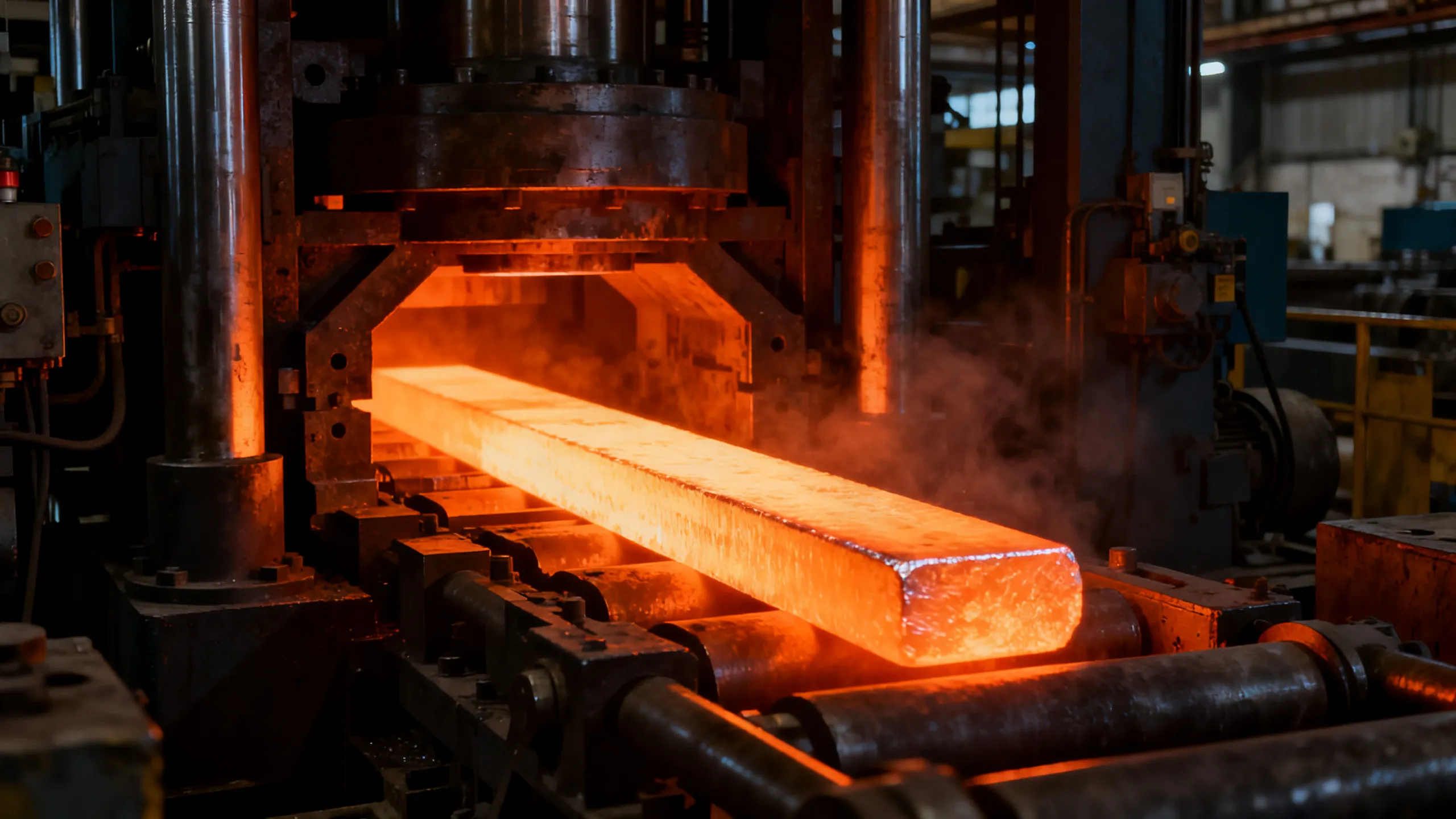
PROCESS / 02
Extrusion: several press capacity classes, scheduled to the section
Presses are assigned by circumscribed circle and wall thickness, with large sections and thin walls run on separate lines; multi-spec sections come straight from the die drawing, backed by die ovens and compressed air for continuous output
- Largest circumscribed circle φ380 mm
- Minimum wall thickness 0.8 mm
- Complex hollow cavities in one pass
- Sections straight from die drawings
- Custom die support
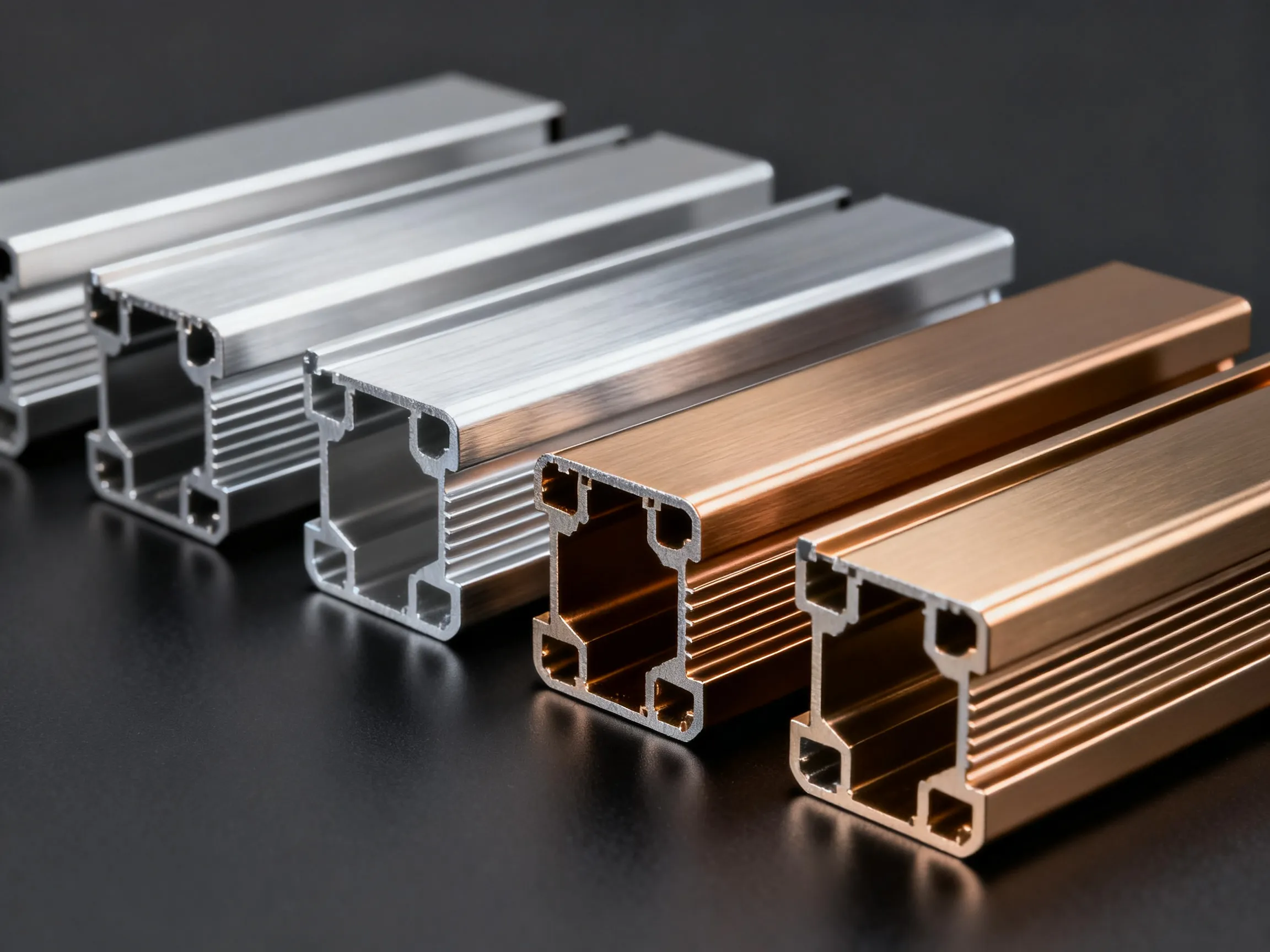
PROCESS / 03
Cooling table · pulling & straightening
Extruded profiles cool evenly on the cooling table while the puller guides and straightens them — keeping straightness and section dimensions stable, a precision base for assembly and further processing.
- Even cooling
- Pulling & Straightening
- Straightness control
- Stable section dimensions
- Precision for downstream work
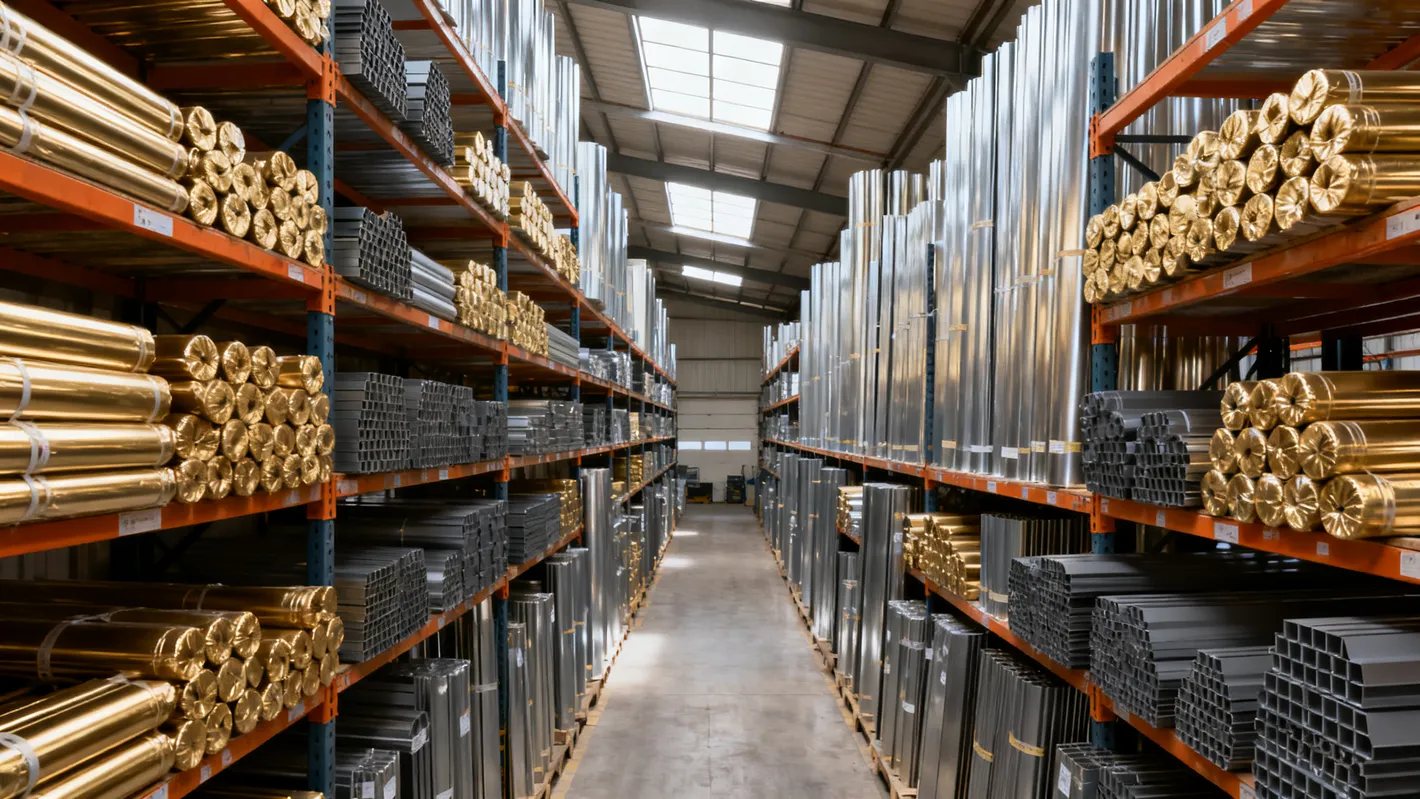
PROCESS / 04
Ageing
Profiles enter the ageing process for mechanical-strength enhancement, then move to zoned finished-goods storage and per-project stocking once at engineering-use condition — five product lines warehoused in one park, significantly compressing lead times.
- Ageing strengthens
- Stocked by project
- In-park production cuts coordination
- Five product lines warehoused in one park
- Scheduled back from site milestones
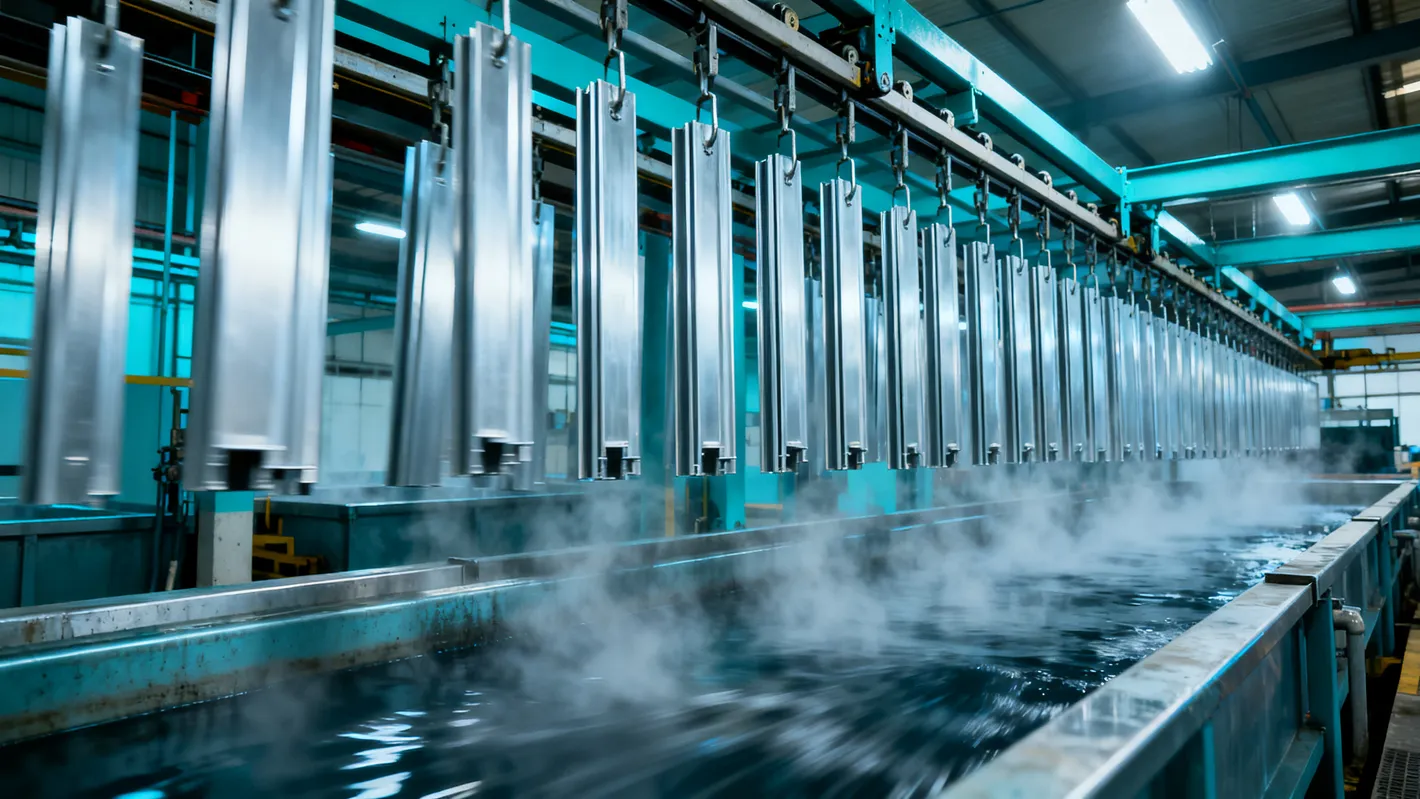
PROCESS / 05
Blasting and anodising
Blasting is run as pre-treatment to clean the substrate and give an even key for the coating or oxide film. Anodising grows a dense oxide film covering appearance, corrosion resistance and insulation. Pre-treatment for coastal and hot-humid jobs is reinforced to salt-spray conditions
- Even, dense oxide film
- Corrosion and insulation resistance
- Salt-spray ready
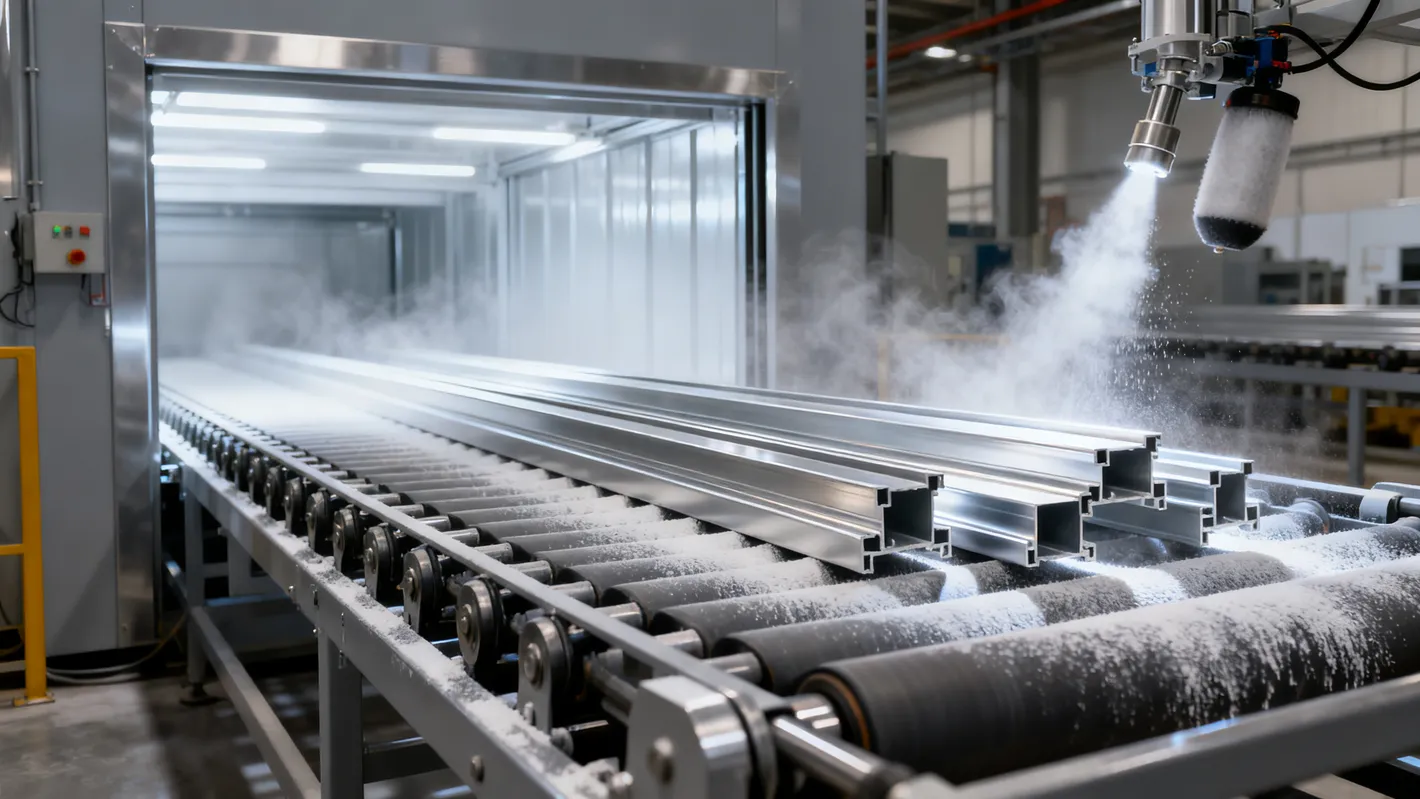
PROCESS / 06
Auto-Spraying
The auto-spray line applies fluorocarbon and powder coatings — fine, even, strongly bonded, weather- and corrosion-resistant. Built for Southeast Asia's tropics: light, strong, corrosion-proof.
- Automated spraying
- PVDF and powder coating
- Weather & corrosion proof
- Fit for tropical SE Asia
Equipment and capability table (click to expand)
| Press capacity classes | Several press capacity classes, matched to each section's circumscribed circle and wall thickness |
|---|---|
| Largest circumscribed circle | φ380 mm (rectangular and shaped sections reviewed per drawing) |
| Minimum wall thickness | 0.8 mm (confirmed by section and alloy) |
| Output basis | Varies with section weight per metre and surface finish; the production window is set by drawing review and order confirmation |
| Finish | Two treatments: coating (PVDF / powder) and anodising |
| Shortest lead time | 12 days from drawing sign-off to shipment (standard custom parts); add 7 days for a new die and first-article trial |
| Standards applied | Chinese national and Thai TIS standards run in parallel; clients pick one for acceptance by project location |